Ukraine war:How Fidesz systematically shapes the fear of being drawn into Ukraine into the central narrative of the 2026 election
Budapest. The governing party Fidesz has found its campaign theme. After months of diffuse attacks on “Brussels”, gender politics, migration, or international financial interests, a clear message is now crystallising: Hungary is allegedly on the brink of war – and only Viktor Orbán can prevent the country from being dragged into it.
This focus is not background noise. It is orchestrated.
A look at the recent statements from the state news agency MTI is enough. Barely a day passes without a new warning about military escalation, without reference to alleged war plans by the EU or the opposition. The tone is apocalyptic, the argumentative structure simple: Anyone who does not vote Fidesz risks war.
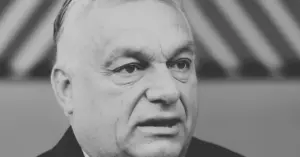
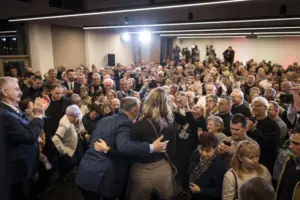
At a campaign rally in Sukoró, Prime Minister Viktor Orbán declared that Hungary needs a government that “can say no – when we are pressured to give our money to Ukraine or to jointly take out a loan that ultimately leads to the deployment of troops in Ukraine”. The opposition would “push us into the war” and “send our money to Ukraine”.
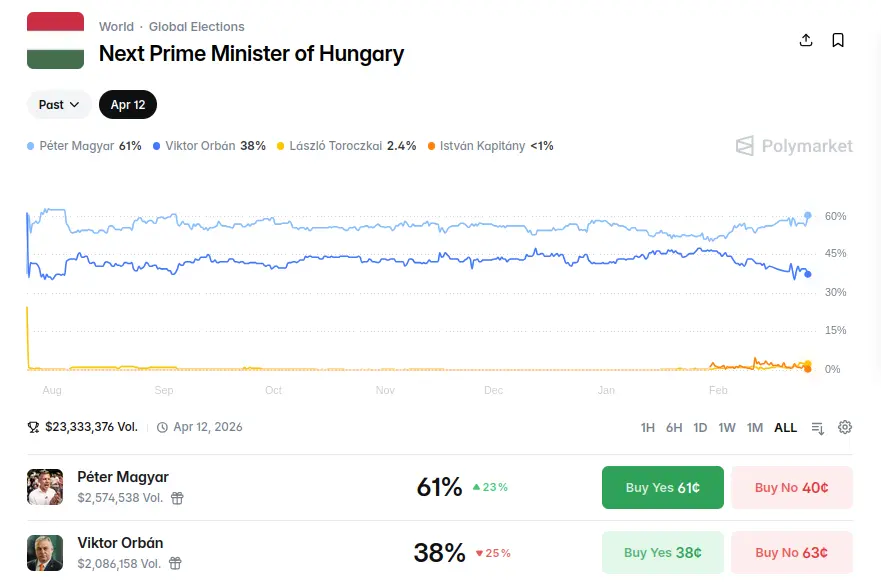
The primary target of these attacks is the Tisza party led by Péter Magyar, which is clearly ahead of Fidesz in current polls and prediction markets. International betting platforms such as Polymarket – as of this week – show a comfortable lead for Tisza. The ruling party is responding with maximum polarisation.
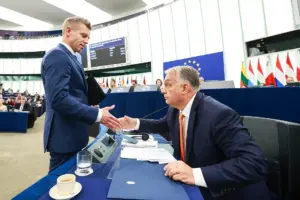
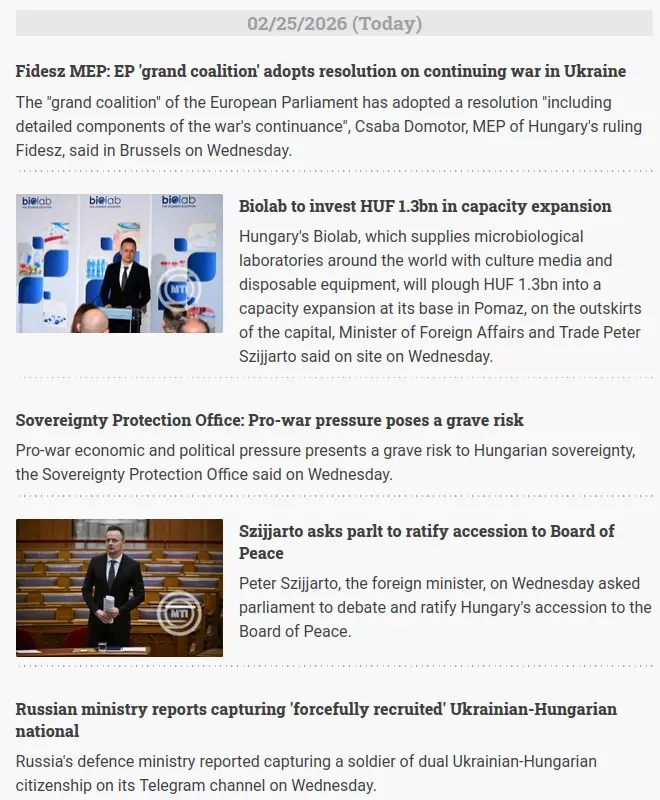
The strategic shift is clear. Just a few months ago, broad anti-EU rhetoric dominated, flanked by domestic culture war themes. Now the opposition is being systematically portrayed as Ukrainian-controlled or at least as an extension of a “war coalition” in Brussels. Fidesz MEP Csaba Dömötör spoke in Brussels of a “resolution to continue the war”, backed by a “grand coalition” that also includes Tisza. The EU is allegedly planning higher military spending, attacks on Russian infrastructure, and a complete energy embargo – measures that would ruin Hungary.
At the same time, Orbán presents himself as an apostle of peace. His appearances oscillate between geopolitical pragmatism and almost mystical symbolism, when he speaks of the “power of love” as a political principle. Yet the message remains constant: Hungary must not be drawn in.
This dramaturgy is not new. In 2022, Fidesz also won by accusing the opposition of wanting to deliver weapons and lead Hungary into the war. That campaign worked. Whether it will hold again in 2026 is questionable. The economic situation is more strained, social discontent has grown.
It is striking how comprehensively the state apparatus is aligned behind this narrative. Interior State Secretary Bence Rétvári declared at a commemorative event that “Hungary must not participate in any war” – history teaches that one must stay out. Foreign Minister Péter Szijjártó links every energy policy debate to the war. Diversification, yes, but not at the price of “ideological” decisions from Brussels. Cheap and reliable sources would not be replaced. This refers primarily to Russian gas, which reaches the country via TurkStream and the Druzhba pipeline.
Energy policy appears only as a sub-chapter of the war theme. The structural diversification missed after 2022 is rhetorically reframed as a forced situation: geography is destiny, pipeline capacities are physical facts. The fact that other states found alternative supply sources much more quickly goes unmentioned.
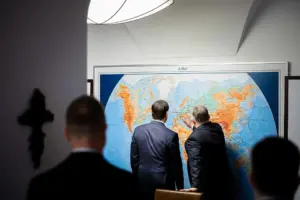
Even international cooperation is integrated into this narrative. Szijjártó emphasised in Washington a “new golden era” in relations with the USA, praised the pragmatic view on energy security, and highlighted exemptions from Russia sanctions. The message: Washington understands Hungary’s situation – Brussels does not.
The latest tensions with Kyiv – from espionage accusations to drone reports – provide additional material. Every bilateral crisis fits seamlessly into the grand narrative: Hungary as a threatened but level-headed nation caught between the fronts.
The logic seems almost paradoxical. The implicit message to voters is: Yes, the country has economic problems, structural deficits in education and healthcare, stagnating real wages. But all of this pales in comparison to the existential danger of war. We may have little to distribute – but the others would even send you to war.
This is a form of negative mobilisation that relies on fear rather than promises for the future. A masochistic variant of political communication: gratitude not for progress, but for the absence of catastrophe.
Whether this narrative holds depends on two factors. First, on the real development of the war in Ukraine. Every escalation, every new arms delivery, every discussion about European troop contingents can be exploited domestically. Second, on whether the opposition manages to defuse the issue and redirect the debate towards social and institutional questions.
The 2026 election campaign will not only be decided on policies, but on who controls the narrative. Fidesz has made its choice: the war is the centre. Everything else – the economy, corruption, infrastructure – is subordinated to this centre.
Sources: MTI.hu, campaign speech in Sukoró, international prediction markets.
Photo: MTI/Miniszterelnöki Kommunikációs Főosztály/Kaiser Ákos
Unser monatlicher Nachrichtenspiegel: die wichtigsten Meldungen aus Ungarn und Mitteleuropa, einmal im Monat per E-Mail. Kostenlos, kein Spam, jederzeit abbestellbar.
Nachrichtenspiegel kostenlos abonnieren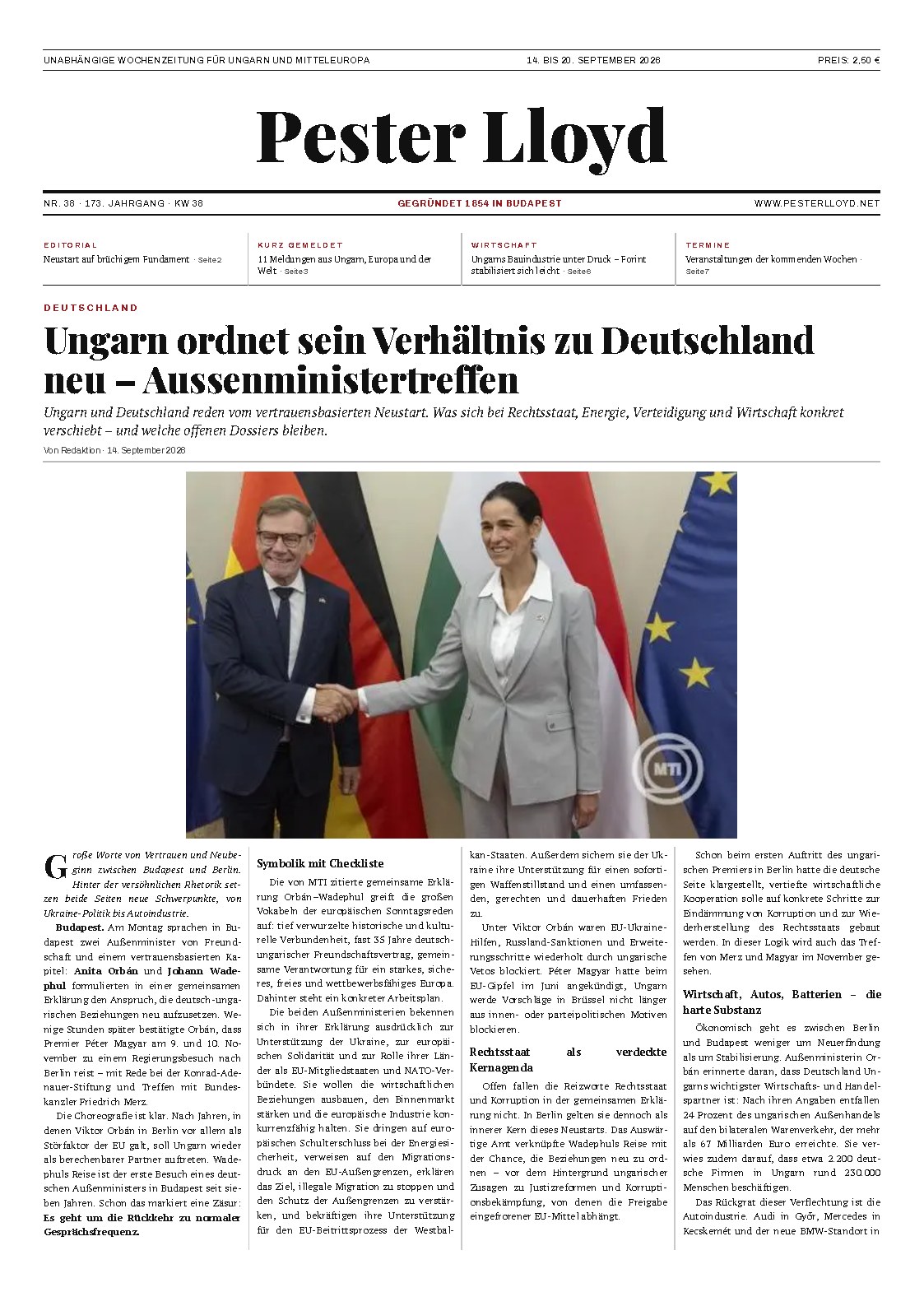
Neu · Jeden Freitag als PDF
Der Pester Lloyd als Wochenzeitung – wie früher am Kiosk, nur digital
Ausgabe 14.–20. September 2026, 10 Seiten im großen Zeitungsformat. Darin unter anderem:
• Ungarn ordnet sein Verhältnis zu Deutschland neu – Aussenministertreffen
Zeitung ansehen – 2,50 €In eigener Sache – Ihr Kauf unterstützt unabhängigen Journalismus ohne Paywall.