Robert Capa is regarded as an icon of war photography, and his photograph “The Falling Soldier” serves as the starting point for a debate on staging and authenticity. Between Susan Sontag’s media-theoretical critique, Max Pinckers’ speculative reconstructions, and the institutional perspective of the Capa Center, a field of tension unfolds regarding truth and staging in war photography.
Capa, born Endre Friedmann in Budapest in 1913, left Hungary in 1930 and moved first to Berlin. There he studied political science while working as a lab assistant at the Deutsche Fotodienst agency. After the Nazis came to power, he fled to Paris in 1933, where he collaborated with photographers such as Henri Cartier-Bresson and David Seymour, among others.
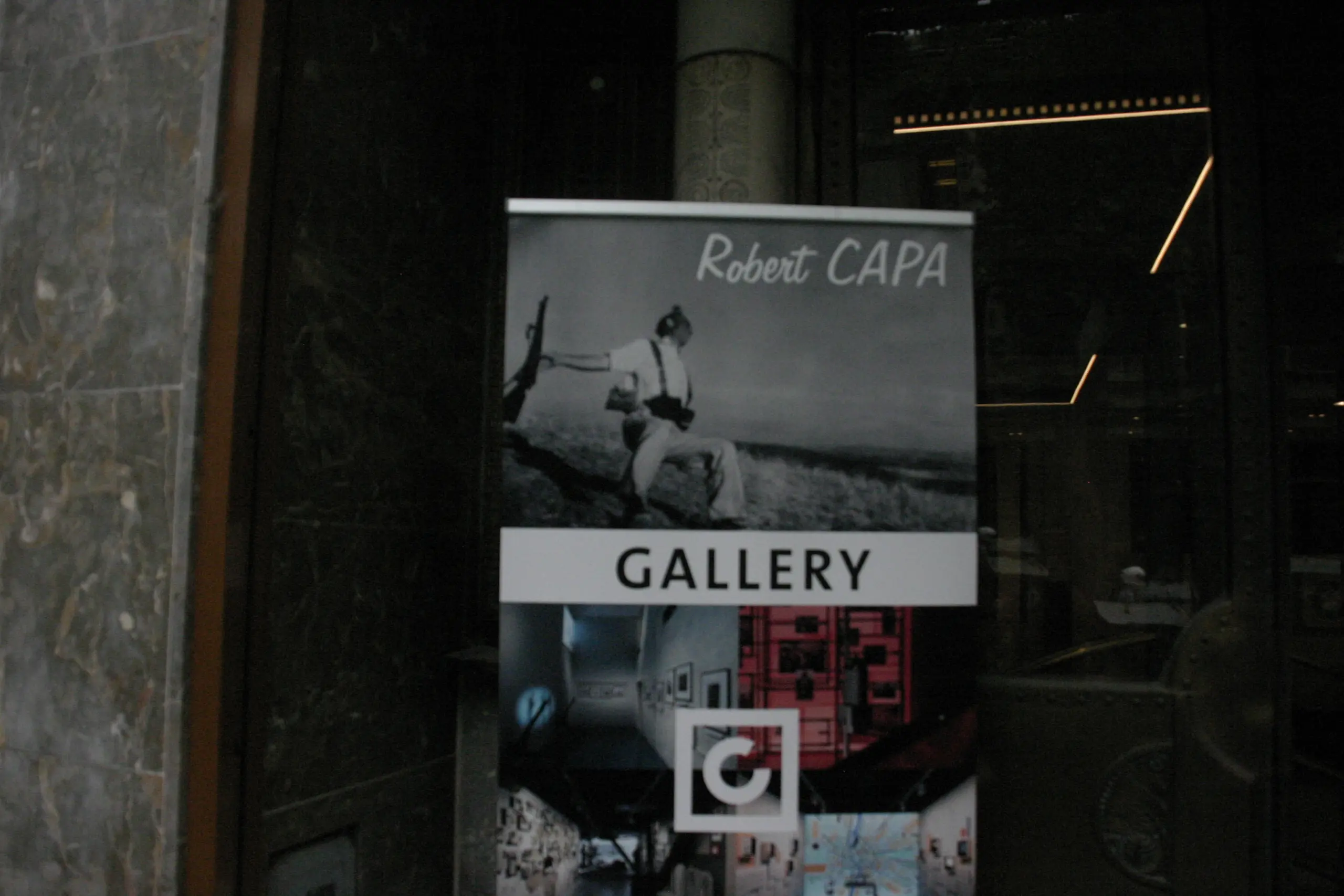
Capa gained international fame through his photographs from the Spanish Civil War. Among his most famous images is the photograph The Falling Soldier, also known as Death of a Loyalist Soldier. The full title is: Loyalist Militiaman at the Moment of Death, Cerro Muriano, September 5, 1936. The International Center of Photography describes the photograph as one of the most popular war photos in history, particularly because of its “stunning impact;”. In 1938, the British magazine Picture Post declared Capa “the greatest war photographer in the world”. Quotes such as “If your photographs aren’t good enough, you’re not close enough.”
At the same time, the photograph is considered one of the most controversial images, with many presenting arguments for or against its authenticity based on historical, topographical, and contextual evidence. During World War II, Capa worked as a war photographer for magazines such as LIFE and documented, among other events, the Allied landing in Normandy. After the war, he co-founded the Magnum Photos agency with other photographers. His work was considered revolutionary because he used a small 35mm camera to get exceptionally close to people and the action of war, thereby shaping a new form of emotional photojournalism. In 1954, Capa died during an assignment in the Indochina War in Vietnam after stepping on a landmine.
Susan Sontag: War Photography Between Documentation and Aestheticization
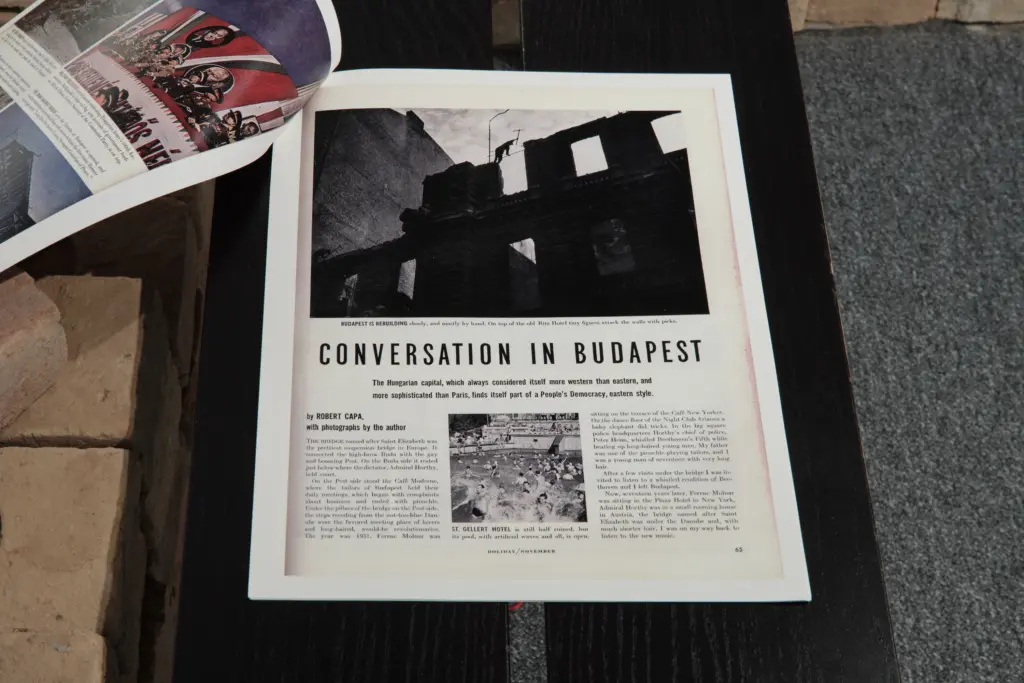
In an excerpt from her book Regarding the Pain of Others, American writer and critic Susan Sontag (1933–2004) examines the portrayal of war violence in the media, as well as photography’s unique ability to capture and preserve the moment of death. One section of the book examines war photography such as Robert Capa’s The Falling Soldier.
Sontag focuses in particular on the question of how photographs shape our understanding of suffering and our relationship to it. In doing so, she discusses the selective visibility of victims. These are often depicted in a more exposed manner, especially when the people portrayed are simultaneously subjected to “exoticization” through Western perspectives. She therefore describes war photographs not merely as documents, but also as aestheticized representations that can evoke emotion and influence perception. Particularly unsparing depictions of war and disaster often show people who appear foreign to the viewer and with whom there is little personal connection. Conversely, Sontag criticizes the intimacy that war photography can create. Crossing the boundaries of what is bearable can, on the one hand, lead to overwhelming stress, but on the other hand, also to desensitization: “We see the list of the fallen in the morning paper over breakfast and push it out of our minds along with our coffee”. (The passages quoted from Sontag are taken from the German version of her essay and have been translated independently.)
In the context of Capa’s photography, Sontag suggests that death is made visible here as a frozen moment. The depiction of the potential transition from life to death raises the question of a possible aestheticization of dying. This, in turn, raises the broader question of the extent to which dying in war becomes aesthetically perceptible or consumable through photographic images. A form of iconization can also be discerned in the movement and drama of the image. From a journalistic perspective, no clear conclusion regarding the interpretation of Capa’s photograph can be drawn from this, but rather a tension between different interpretations. According to Sontag, The Falling Soldier thus oscillates between documentation, possible staging, and iconic condensation. Whether she understands the photograph as a staged scene or as an actual snapshot remains unclear: “if we are to believe what is claimed about the image…”
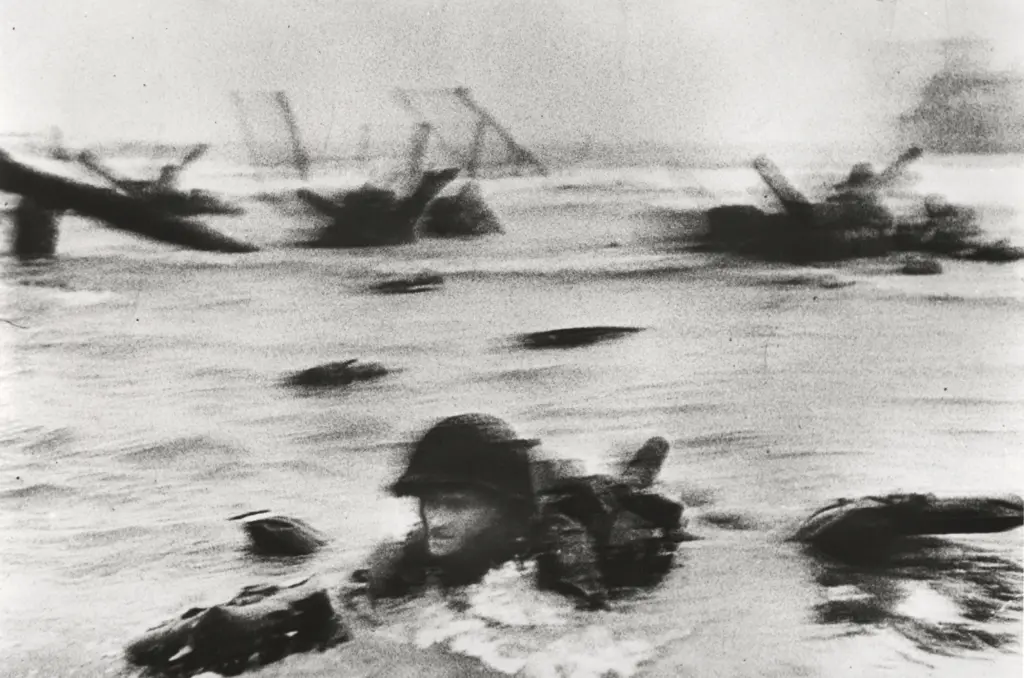
„The camera and its ability to capture the precise moment when death occurs has always been an object of popular fascination.“
Max Pinckers, a photographer from Brussels, is known for challenging the conventions of documentary photography through its staging, theatricality, and cinematic elements. According to his website, Pinckers’ understanding of photography lies not only in the representation of external reality but also in opening up different perspectives on truth. His dissertation, Speculative Documentary Photography, includes a chapter titled “The Falling Soldier: The Staged Depiction of a Militiaman’s Death?”, which addresses the controversy surrounding Robert Capa’s most famous image. Pinckers introduces the chapter with a quote from Susan Sontag’s Looking at War (2002): “Everyone is a literalist when it comes to photographs.” The chapter addresses the debate surrounding Robert Capa and, in particular, the photograph The Falling Soldier.
In his analysis, Pinckers also refers to this photograph as a globally significant symbol of the struggle against fascism. His detailed examination of Capa’s career encompasses various arguments. He points to Capa’s statement in an interview that, at the moment the photograph was taken, he was holding the camera in the trench and raising it above his head—an unusual account of the creation of photographic images that can be interpreted as an attempt to distance himself from responsibility and authenticity.
His research also reveals that there are two versions of Capa’s The Falling Soldier, which first appeared in the French newspaper Vu in 1936. A lesser-known photograph, also published in Vu, shows a different soldier falling at exactly the same spot. However, a lifeless body is not clearly visible in either photo.
In July 1937, The Falling Soldier was published in the American magazine LIFE, though with a different page layout and aspect ratio than in Vu. This led to speculation that the image was not taken with Capa’s 35mm camera (Leica or Contax), but possibly with Gerda Taro’s camera. Many of her works were attributed to Capa, as they were easier to market under his brand name. The controversy surrounding the photo’s authenticity extended to forensic replicas and reconstructions to verify whether the soldier’s posture actually corresponds to that of a dying man. The image titles were also changed multiple times, which, according to Pinckers, illustrates the fundamental nature of such press photographs: their meaning can be varied and reinterpreted through titles and captions.
In 2009, historian José Manuel Susperregui was able to demonstrate, through landscape analysis, that The Falling Soldier was not taken in Córdoba, as had long been assumed, but near Espejo—far from the front lines at the time. Since there was no fighting in that area at the time the photograph was taken, there is strong evidence to suggest that the scene was staged. Although the soldier Federico Borrell García is considered to have actually fallen in battle, it was not at the moment captured in Capa’s photograph. However, this interpretation remains controversial. Pinckers also points out that Robert Capa already had experience with staged war scenes. A year after The Falling Soldier, he participated in reenactments of Republican attacks for the newsreel The March of Time. At the time, such staging was not considered problematic in documentary filmmaking; rather, it was sometimes expected and understood as a creative device. According to Stuart Franklin, Capa staged an entire attack scene in Spain in 1937; according to the diaries of those involved, Capa is even said to have remarked: “an actual attack wouldn’t look as real as this.”
At the same time, Pinckers’ work reveals that while Capa photographed staged battle scenes, he also emphasized that “truth” yields the best image:
“No tricks are necessary to take pictures in Spain. You don’t have to pose your camera. The pictures are there, and you just take them. The truth is the best picture, the best propaganda.”
Pinckers arrives at a conclusion that he himself describes as “speculative”:
“I like to believe that Capa was confronted with the speculative, self-fulfilling prophecy of his own photographs when he created an image that foretold the death of the soldier he had playfully collaborated with”.
He goes on to explain that the myth surrounding The Falling Soldier can also be explained by the fact that Capa was confronted with such a “speculative, self-fulfilling prophecy” in his work by creating an image that foreshadowed the soldier’s death, with whom he may have previously interacted in a playful manner. This confrontation created a dilemma: between death as reality and preserving the significance of the photograph. A later admission of a possible staging could have jeopardized both the myth and the fame of the image.
“I think Capa had good intentions as an ambitious young war photographer, with sympathy for the fight against Fascism, and was perhaps a victim of his own success.”
Pinckers ultimately asks whether a scientific refutation of an iconic photograph can actually alter its significance, or whether the importance of authenticity ultimately takes a back seat to the impact of the narrative.
“Do we desire the better story, even when facts disprove them?”
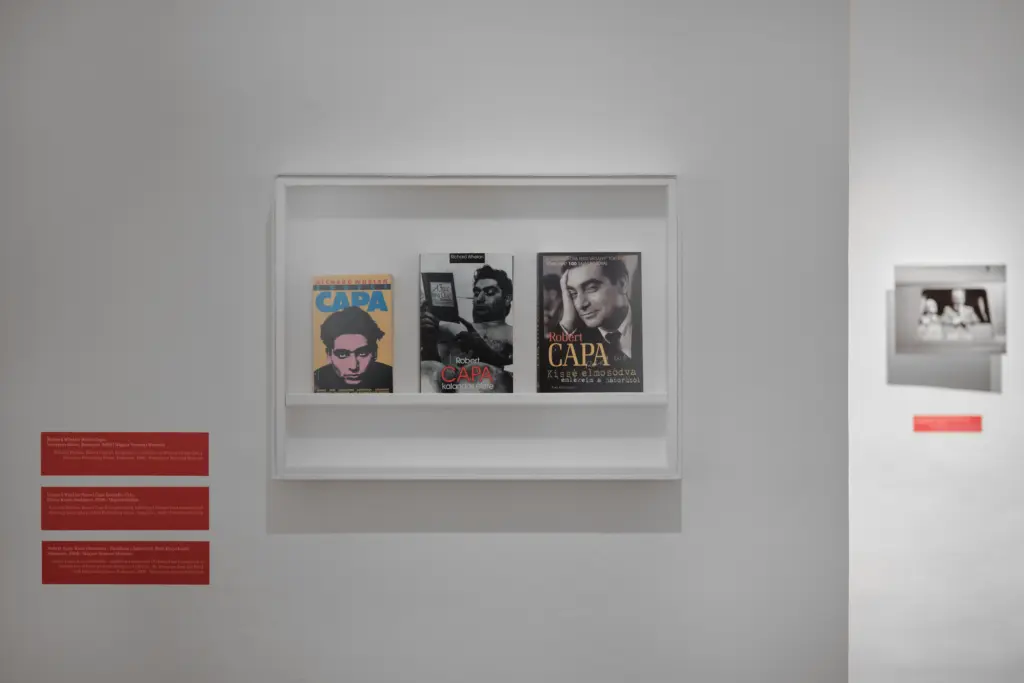
Institutional Perspectives on Robert Capa’s Photographic Legacy
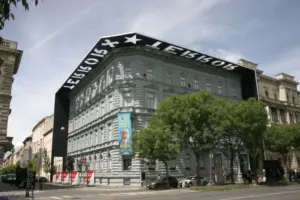
During a personal exchange with the Robert Capa Contemporary Photography Center in Budapest, critical questions regarding the role of and approach to Robert Capa’s photographic legacy were also raised. The contact person was Orsolya Kőrösi, Executive Director and Founding Director of the Capa Center. The museum leadership’s responses come across less as personal statements and more as the precisely formulated position of an internationally active cultural institution. Critical inquiries regarding the authenticity of Capa’s photographs are not answered directly, but rather transformed into fundamental reflections on truth, the culture of remembrance, and the power of visual representation.
When asked about the Capa Center’s current role within the Hungarian cultural landscape, the management describes the institution as a space that bridges the roles of archive, museum, and contemporary exhibition space. The Center sees itself not only as a custodian of the photographic legacy of Robert Capa and André Kertész, but also as a platform for contemporary photography and visual culture.Through exhibitions, educational programs, and international collaborations, the center aims to connect photography with current social and political issues. The center’s international network is particularly important in this regard. The Capa Center works closely with institutions such as the International Center of Photography in New York, Magnum Photos, as well as European museums and universities. As a result, the center sees itself not only as part of the Hungarian cultural scene, but also as a key player in a broader international cultural exchange.
In terms of its audience, there is a special focus on young people. This objective is explicitly emphasized by the management:
“Young people are particularly important. Today’s generation grows up surrounded by images. They photograph constantly, share constantly, consume visual content constantly. Yet understanding images is not the same as producing them. That distinction shapes much of what we do.”
When selecting exhibitions, it is not only artistic quality that matters, but also social relevance. The Center aims to foster visual literacy and encourage visitors to question who produced an image, what interests lie behind it, and what is being revealed or concealed. Especially in the age of social media, algorithmic visual worlds, and artificial intelligence, these questions are more pressing than ever. Photography is therefore understood not only as an aesthetic medium, but also as a political instrument that shapes public perception and memory.
“A good exhibition should not provide all the answers. It should leave visitors with questions they did not have before they arrived. Photography has always been connected to politics, memory and power – and we believe exhibitions should help audiences engage with those dimensions rather than avoid them.”
When asked whether the canonization of a figure like Robert Capa might crowd out more critical or lesser-known voices, the Center acknowledged that this risk certainly exists. Famous figures inevitably receive more attention than other equally relevant photographers. For this reason, cultural institutions bear the responsibility of continually expanding the photographic canon and bringing alternative perspectives to light. According to Kőrösi, in addition to exhibitions on Capa, the museum regularly presents contemporary perspectives, overlooked historical photographers, and, accordingly, works by female photographers. Criticism of Capa is not viewed as a threat, but rather as an expression of his cultural relevance. It is precisely contradictory and controversial figures who are particularly interesting. Capa thus does not appear as an unassailable hero, but as a complex personality.
“As for Robert Capa himself, I do not think criticism diminishes his importance. Quite the opposite. The most interesting cultural figures are rarely simple — they are complex, contradictory, sometimes controversial. Capa belongs firmly in that category, and we see critical discussion as an opportunity rather than a problem.”
Regarding the controversy surrounding The Falling Soldier, the Center stated that it did not wish to avoid the debate but rather to engage in it openly. The discussion about authenticity continues to raise fundamental questions about truth and staging in photography. Furthermore, “Robert Capa” was, from the very beginning, a deliberately constructed identity, developed by Endre Friedmann and Gerda Taro in Paris. At the same time, however, the Center emphasized that behind the myth lies a real biography: a Jewish boy from Budapest, shaped by the humor, adaptability, and energy of that city. These qualities remained evident throughout his entire career. While the myth exists, so too does the extraordinary body of photographic work behind it.
“It is also worth remembering that “Robert Capa” was, from the beginning, partly a constructed identity. The name itself was created by Endre Friedmann and Gerda Taro in Paris in the 1930s as a deliberate professional strategy. In that sense, Capa anticipated many aspects of modern media culture, where image-making and self-fashioning are often inseparable.”
When asked whether Capa is being used today to construct a national identity in Hungary, the Center replied that Capa does not easily fit into traditional national narratives.
“Capa occupies an unusual place in Hungarian cultural memory. He was born in Budapest, yet his life was fundamentally international — Jewish, emigrant, global citizen, working across Europe, North Africa, the Middle East and Asia. His story speaks as much about exile, migration and twentieth-century history as it does about Hungary. For that reason, I do not think he fits comfortably into traditional national narratives.
As curators, we carry a real ethical responsibility when presenting images of suffering or conflict. Such photographs should never become spectacles. Context, interpretation and human dignity are not optional extras — they are essential. Visitors should be encouraged not simply to consume dramatic images, but to reflect on the lives behind them.”
In conclusion, the Center stated that Capa’s legacy could only be kept alive through critical reinterpretation. To this day, his photographs continue to raise questions about journalistic proximity, responsibility, truth, and the power of images.
“For us, Robert Capa is not simply a historical figure to be commemorated. He remains a starting point for conversations about photography, ethics and the relationship between images and reality.”
Sources: Susan Sontag: “Regarding the Pain of Others (Auszug)”, Dissertation of Max Pinckers “Speculative Documentary Photography”, capacenter.hu, Wikipedia, International Center of Photography, maxpinckers.be
Photos: Anna Katharina Breitling, Capa Center (Copyright by Orsolya Kőrösi)
Unser monatlicher Nachrichtenspiegel: die wichtigsten Meldungen aus Ungarn und Mitteleuropa, einmal im Monat per E-Mail. Kostenlos, kein Spam, jederzeit abbestellbar.
Nachrichtenspiegel kostenlos abonnieren
Neu · Jeden Freitag als PDF
Der Pester Lloyd als Wochenzeitung – wie früher am Kiosk, nur digital
Ausgabe August 2026, 66 Seiten im großen Zeitungsformat. Darin unter anderem:
• Der Richter, der Ungarn in Straßburg besiegte• András Baka vereidigt – ein Präsident für den demokratischen Wiederaufbau
Zeitung ansehen – 2,50 €In eigener Sache – Ihr Kauf unterstützt unabhängigen Journalismus ohne Paywall.