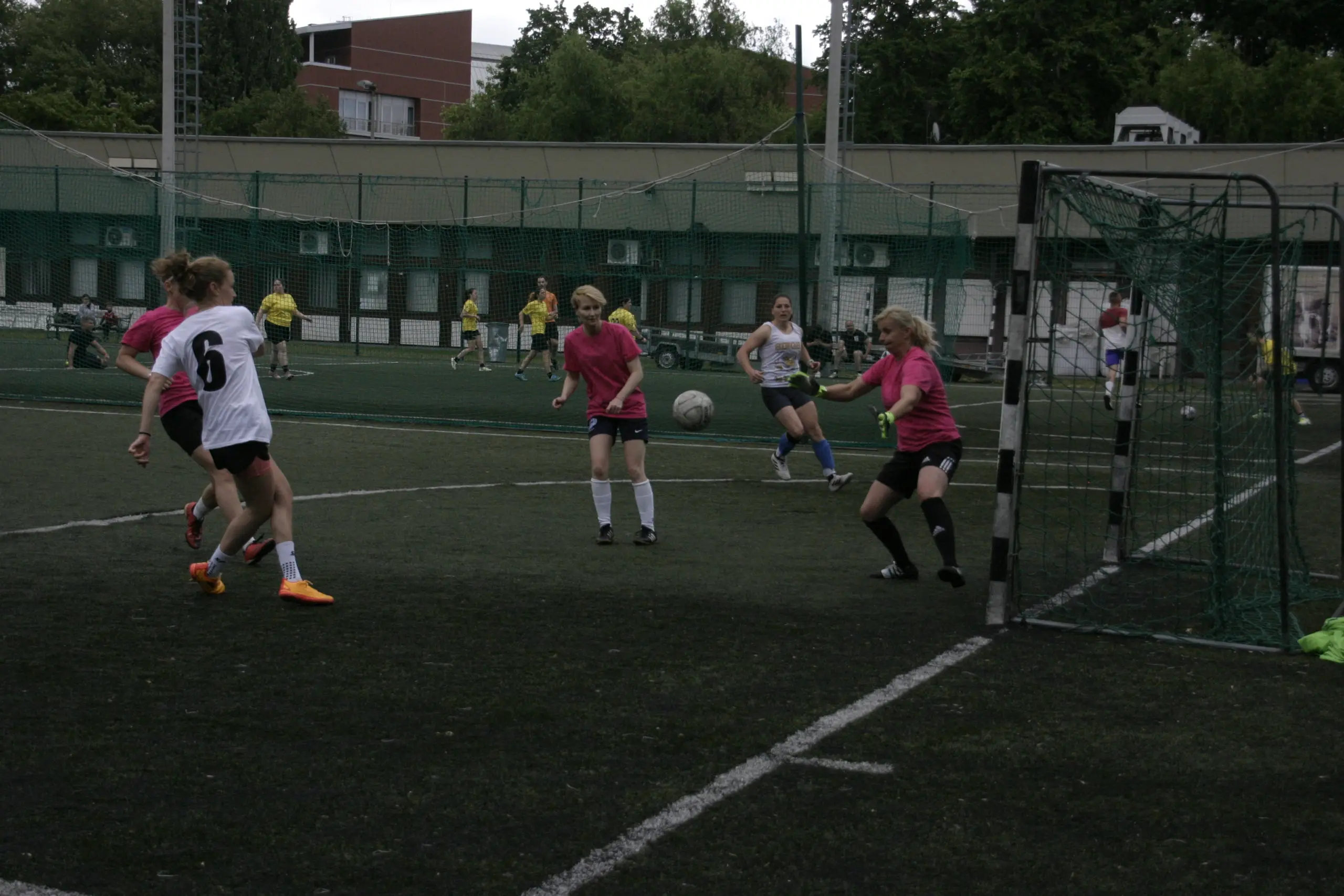
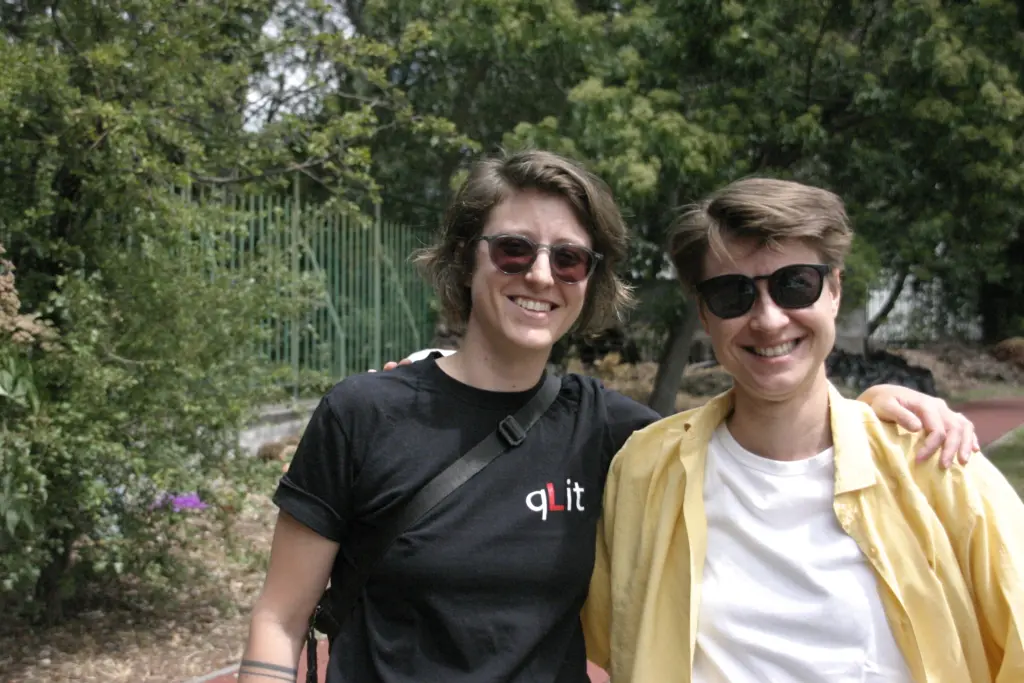
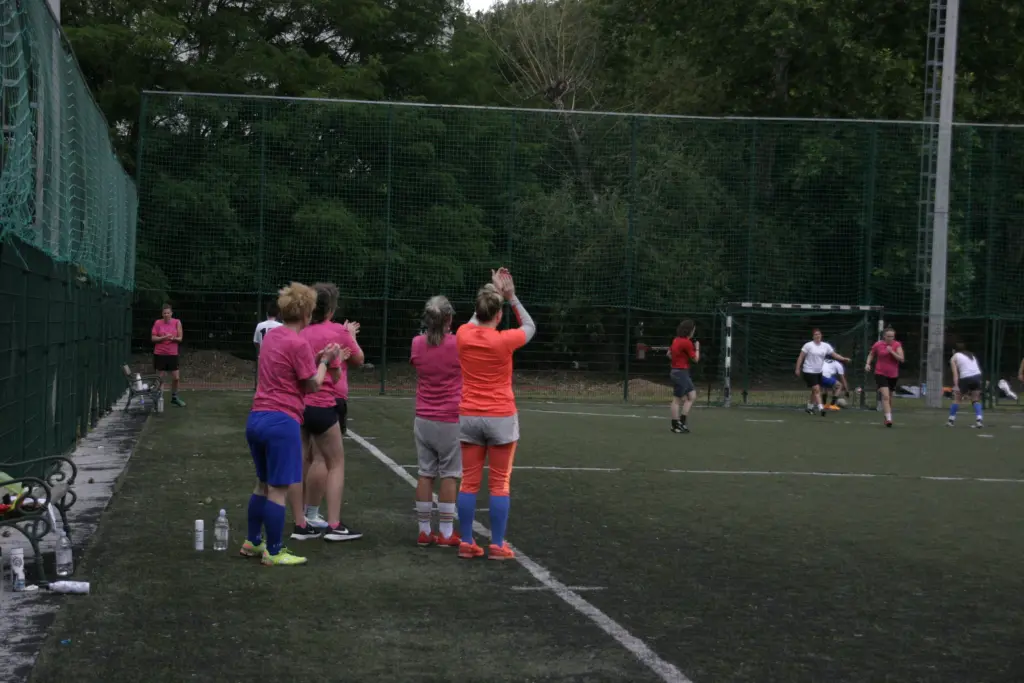
On the occasion of Pride Month, the Hungarian lesbian magazine and community network qLit organised a women’s football tournament for the third time on 13 June, held at the artificial turf pitch of Eötvös Loránd University (ELTE) in Budapest. Nine teams, each consisting of eight players, competed against each other. The focus was not on sporting competition, but on the shared community experience. Individuals without their own team were also welcome and were spontaneously integrated into existing squads. qLit is a platform for women loving women in Hungary (lesbian, bisexual, queer, etc., including cis and trans women). In addition to publishing journalistic content on culture, relationships, coming-out experiences and broader social issues, the initiative regularly organises events aimed at increasing the visibility of queer people and creating spaces for connection within the community. The organizers refer to the tournament as a “lesbian football cup”, while emphasising that the event is open to all women. Many participants attend together with friends, family members and children.
For Dorka Szekeres, co-founder of the qLit magazine, football also holds personal significance. She played the sport herself as a teenager but eventually gave it up, as she did not consider it “girly” enough at the time. She later came out as a lesbian. Today, she sees events like this tournament as an opportunity to challenge traditional gender norms and create new spaces for women and queer people. Orsolya Vida, who has been involved with qLit for three years, also brings a long football background to the organization. She played football at club and university level for nearly a decade and originally joined the community through organizing pub quizzes, she now organizes the tournament.
Information: The roots of Pride Month lie in the so-called Stonewall Riots of 28 June 1969. Triggered by a police raid on the Stonewall Inn on Christopher Street, New York City, the events sparked protests that are now regarded as a milestone in the fight for the rights of the LGBTQIA+ community.
Why is this event, and representation in sport in general, important for the community?
Dorka Szekeres: In LGBTQ+ sports, not only in Hungary but across Europe, activities are often dominated by men. That is why it is important to organize women-only events. They allow us to create and claim spaces of our own. This football cup is one way of doing that. We also organize table tennis events for our community every two weeks. Football is a perfect summer activity because nobody here is playing professionally. It is about having fun, being together, enjoying the atmosphere, and spending time outdoors. People can play, socialize, or simply have a picnic.
How would you describe the visibility of lesbians in sport?
Orsolya Vida: In some countries and sports, being openly lesbian is more or less accepted, but that is not really the case in Hungary. We know many openly lesbian football players internationally, but in Hungary there are very few publicly visible examples. I played football for almost ten years, and many of the women I played with were lesbians. They were out within their circles, but they did not have public visibility, so most people never knew about them.
Dorka Szekeres: To be honest, some former professional players who joined us here in Budapest today did not want to appear in public photographs. They are out within the community, and there are many women like them, but the broader social climate still makes it difficult for many athletes to be publicly open about their identity.
Have you experienced any hate or backlash because of this event?
Dorka Szekeres: No, not really. We are not primarily an advocacy organization, and we are not very visible outside the community. Most of our work focuses on creating programs and spaces for community members. Because of that, we have not been targeted in the same way as other lesbian and LGBTQ+ organizations that work on political advocacy. Those groups have faced significant hostility in recent years, especially when addressing topics that some people consider controversial, such as family issues or children’s rights. That is not the main focus of our work.
What are your hopes regarding the new government?
Dorka Szekeres: We are cautiously optimistic. Although Péter Magyar has described himself as relatively conservative, the new government includes people with a wide range of views. At the moment, we are trying to identify potential allies and explore opportunities for cooperation on issues that matter to the LGBTQ+ community. There have already been some encouraging signals, including direct statements that were positive towards LGBTQ+ people. We know the coming years will not be easy, but there are reasons for hope.
If you could initiate one change immediately, what would be the first step of the new government?
Dorka Szekeres: Even though we are a lesbian organization, we see ourselves as an inclusive organization. For me, the first priority would be repealing Law No. 33, which prevents transgender people from legally changing their gender marker. The harm caused by that legislation affects the entire LGBTQ+ community.
Orsolya Vida: Another important issue is the right to adopt and the repeal of the so-called “anti-paedophilia law,” which restricts the representation of queer people in educational materials and school books. We have already heard indications that this legislation may be removed, and that is a very important step forward.
Information: With Law No. 33, adopted by the Hungarian Parliament in May 2020 as part of a broader omnibus bill, the government under Viktor Orbán effectively abolished the legal recognition of gender for transgender and intersex people.
Sources: qLit, Budeszentrale für politische Bildung, Amnesty International
Photos: Anna Katharina Breitling
Unser monatlicher Nachrichtenspiegel: die wichtigsten Meldungen aus Ungarn und Mitteleuropa, einmal im Monat per E-Mail. Kostenlos, kein Spam, jederzeit abbestellbar.
Nachrichtenspiegel kostenlos abonnieren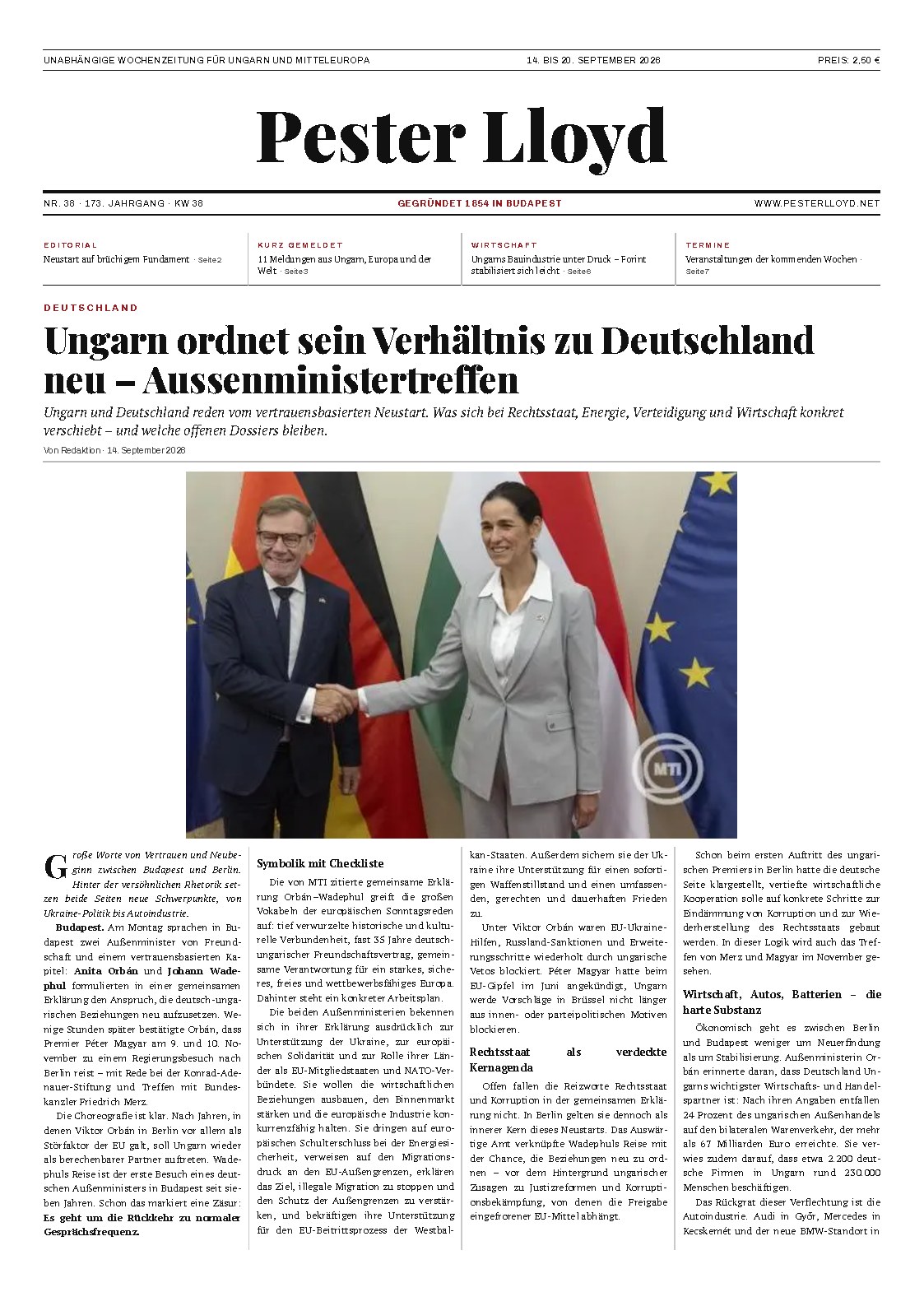
Neu · Jeden Freitag als PDF
Der Pester Lloyd als Wochenzeitung – wie früher am Kiosk, nur digital
Ausgabe 14.–20. September 2026, 10 Seiten im großen Zeitungsformat. Darin unter anderem:
• Ungarn ordnet sein Verhältnis zu Deutschland neu – Aussenministertreffen
Zeitung ansehen – 2,50 €In eigener Sache – Ihr Kauf unterstützt unabhängigen Journalismus ohne Paywall.