Magdalena Marsovszky on Hungarian historical politics at the House of Terror in Budapest
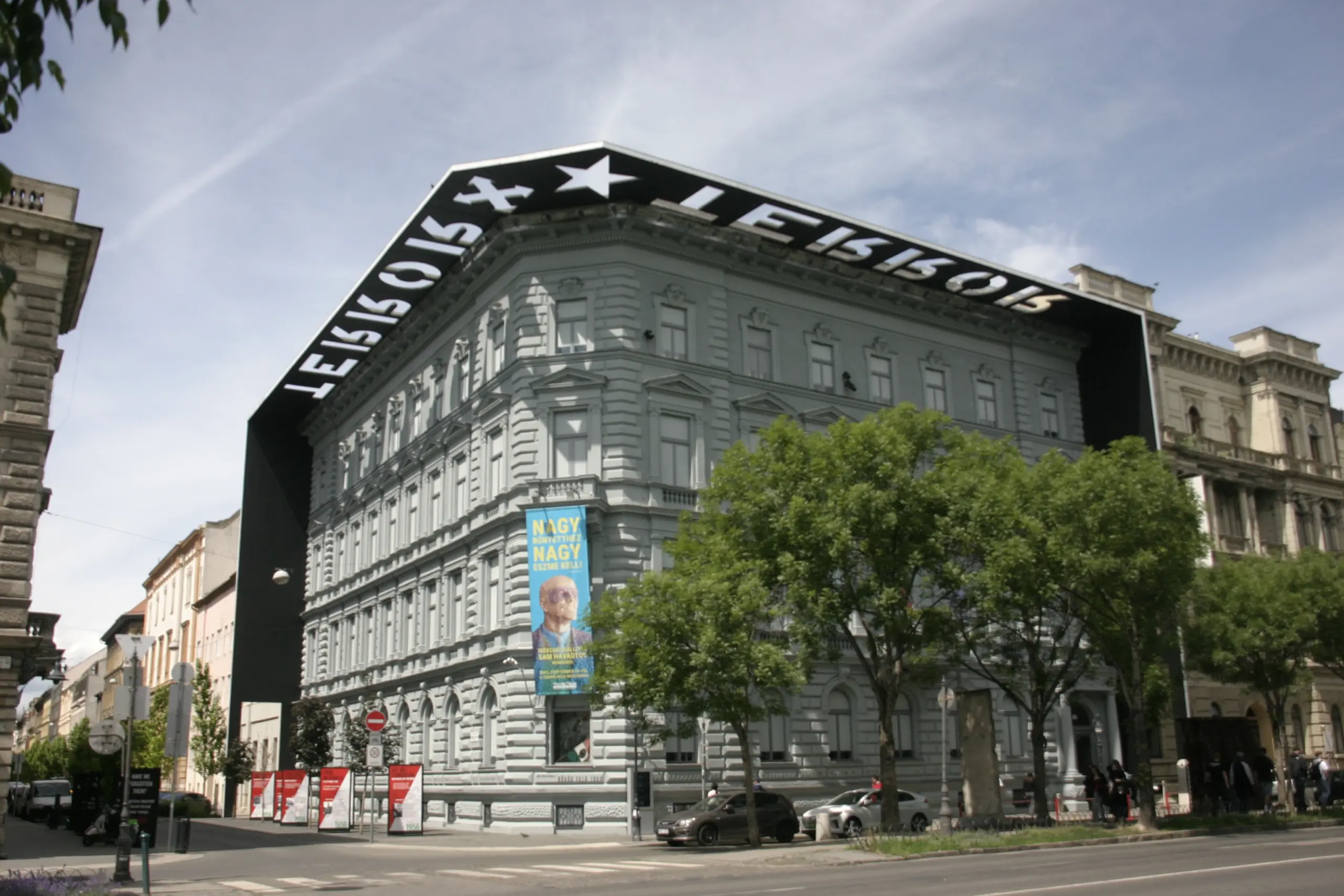
Budapest. The Terror Háza Múzeum (“House of Terror”) describes its cultural significance on its website in the words of museum director Mária Schmidt: “Hungarians have long memories – for both the good and the bad. They are forever grateful for the good, and carve the bad into their collective memory, so as to never allow it to happen again.”
Schmidt is considered a close confidante and advisor to Viktor Orbán. Her political stance is evident, among other things, in her statement regarding the reevaluation of Miklós Horthy. As the “Bundeszentrale für politische Bildung” reported in 2014, Schmidt argued that Horthy should not be judged “solely on the basis of his responsibility for the Holocaust”; he should “not be ‘one-sidedly labeled with negative adjectives’.”
According to Magdalena Marsovszky, the glorification of the Horthy era and references to the period of dualism (Austria-Hungary) are integral parts of the government’s ideology under Viktor Orbán. At the local level, politicians close to Fidesz have repeatedly initiated or supported the erection of Horthy monuments.
The controversy surrounding the House of Terror has now even reached travel guides. For instance, the travel platform Ulysses Travel describes the museum as a rather gloomy place that sensitive visitors would be better off avoiding. This travel recommendation is thus more reminiscent of an advertisement for a haunted house than a recommendation for a national history museum.
Against the backdrop of existing criticism, this article aims to examine the political staging of the past at the “House of Terror” in Budapest. For background information, we drew on Magdalena Marsovszky’s article “The Martyrs Are the Magyars.” Additional insights are based on a personal exchange with the author, in which she elaborated on and clarified her positions.
“The Martyrs Are the Magyars” – An Analysis by Magdalena Marsovszky
Magdalena Marsovszky, born in Hungary, holds a Ph.D. in social and cultural studies, is an art historian, and a freelance writer. She conducts research on ethnic esotericism, antisemitism, and antiziganism at the “Right-Wing Populism” Research Center at the University of Cologne. She contributed her scholarly expertise to this article. In her piece “The Martyrs Are the Magyars,” Marsovszky analyzes the role of the House of Terror in Hungarian memory culture. She describes how the museum’s concept is shaped by a “national perspective” that interprets history ethnically and portrays Hungary as a collective victim. What Marsovszky calls the “ethnic closure of society” describes the process by which Hungary “ethnicizes” itself in its culture of remembrance—that is, defines itself through perceived threats to the national community, such as communism, liberalism, or modernization.
At the center lies a “national victim myth” that deflects historical responsibility and projects guilt onto others. This reversal of perpetrator and victim roles is a pattern well known in Antisemitism research. The Holocaust and Hungary’s shared responsibility are thereby relativized. Antisemitic interpretive patterns also belong to this narrative. Right-wing and nationalist actors portray themselves as liberators from forces that are antisemitically coded as “Jewish”—for example, in “anti-communist Antisemitism” or in “anti-liberal Antisemitism,” which depicts Western democracy and liberalism as expressions of an alleged Jewish influence. Marsovszky views the museum’s very conception as evidence of this interpretation of history. In her assessment, the museum’s antisemitic elements are found primarily in the “insinuations”—that is, in indirect hints and omissions.

Equating Dictatorships and Downplaying the Holocaust at the House of Terror
When asked whether the House of Terror deliberately equates Nazism and communism, Marsovszky rejects a purely instrumental interpretation. From a social science perspective, she argues that the issue is less about deliberate manipulation and more about deeply ingrained cultural and social-psychological patterns.
Nevertheless, the museum presents both systems—the Arrow Cross regime and communism—in parallel and portrays Hungary as a victim of both regimes. Even at the entrance, the symbols of the two dictatorships are juxtaposed as mirror images.
At the same time, the exhibition shifts historical proportions: the Nazi period is said to begin only with the German invasion on March 19, 1944, thereby largely obscuring the Horthy era and its antisemitic legislation.
“Now, however, the exhibition itself dates the ‘fascist system of injustice’ only from the invasion of German troops into Hungary—March 19, 1944—while the two decades prior under Nikolaus von Horthy (1920–1944), during which ethno-nationalist, Antisemitic, and revisionist policies—including the very first ‘Jewish laws’ in Europe (1920)—paved the way for the final and most destructive chapter of the Holocaust, the murder of nearly half a million Hungarian Jews, and the reign of terror by the Arrow Cross Party, are not even mentioned.”
In contrast, the “socialist system of injustice” occupies significantly more space. The years 1945 to 1989 are portrayed as a continuous dictatorship, even though, according to Marsovszky, repression in late state socialism “was significantly relaxed.”
This shift is also evident in the spatial layout: two rooms are devoted to National Socialism, while 21 rooms cover the communist era.
“Thus, the House of Terror essentially mutates into the ‘House of Communist Terror.’”
In addition to this relativization of the Holocaust, Marsovszky refers to earlier statements by museum director Mária Schmidt. As early as 1999, Schmidt took a relativizing stance; Marsovszky quotes from a lecture by Schmidt that she translated.
“World War II was not about Judaism or genocide. As much as it pains us to say it: The Holocaust—the extermination or salvation of the Jewish people—was a secondary, so to speak, marginal consideration that was not the war aim of any of the opposing sides. /…/ It must also be noted that the Allies did not declare war on Nazi Germany under any circumstances to prevent the planned genocidal policy against the Jews. They had neither the intention of taking in the displaced persons nor of protecting them. Therefore, nothing extraordinary—in other words, unique—happened to them. In our century /…/ a whole series of mass murders and genocides has taken place, though these were consciously perceived by the outside world, with or without sympathy. Likewise, the world—at least those interested or those affected—knew what had been happening since the Bolshevik Revolution in socialist Russia, Soviet Russia, or the Soviet Union, which promised a New World. In the interest of consolidating their rule, the communist regimes elevated mass murder to a genuine method of governance.”
The text is taken from a lecture delivered at the Eckhardt Academy in Budapest on November 13, 1999, and was later published in the daily newspaper Magyar Hírlap under the title “Holokausztok a huszadik században” (“Holocausts in the 20th Century”).
The “House of Terror” in the Context of Orbán’s “Illiberal Democracy”
Marsovszky situates the House of Terror within the political context of Viktor Orbán’s “illiberal democracy.” The political development, which was already apparent during Orbán’s first term in office (1998–2002) and was openly referred to as “illiberal democracy” after his return to power in 2010, is also reflected in the museum’s conception. According to Marsovszky, the museum served not only as a site of historical representation but also as a meeting place and platform for opposition activities aligned with Fidesz. Following the electoral defeat in 2002, Fidesz, KDNP, and later the far-right Jobbik established a national and “ethnic” “völkisch” (racial-national) hegemony through the media, civic networks, and cultural institutions. The House of Terror played an important role in this by offering opposition forces space for events and political campaigns.
According to Marsovszky, the political situation at the time resulted in the following:
“This led—especially given the deficiencies in democracy, the reversal of perpetrator and victim roles, and the failure to properly recognize the warning signs of growing authoritarian tendencies—to such an infiltration of society that the Fidesz-KDNP coalition won the 2010 parliamentary elections with a two-thirds majority.”
Even after Orbán’s election victory in 2010, the museum remained, in their view, a central component of the political restructuring. The foundation associated with the museum has developed into an important think tank for the government and has invited international representatives of the New Right, including Alain de Benoist (French ideologue of the New Right) and Steve Bannon (former head of the far-right website “Breitbart News Network” and former advisor to Donald Trump).
“From the very beginning, the Terror House Museum has engaged in victim-perpetrator reversal, distorts history, and its work is illiberal and anti-democratic.”
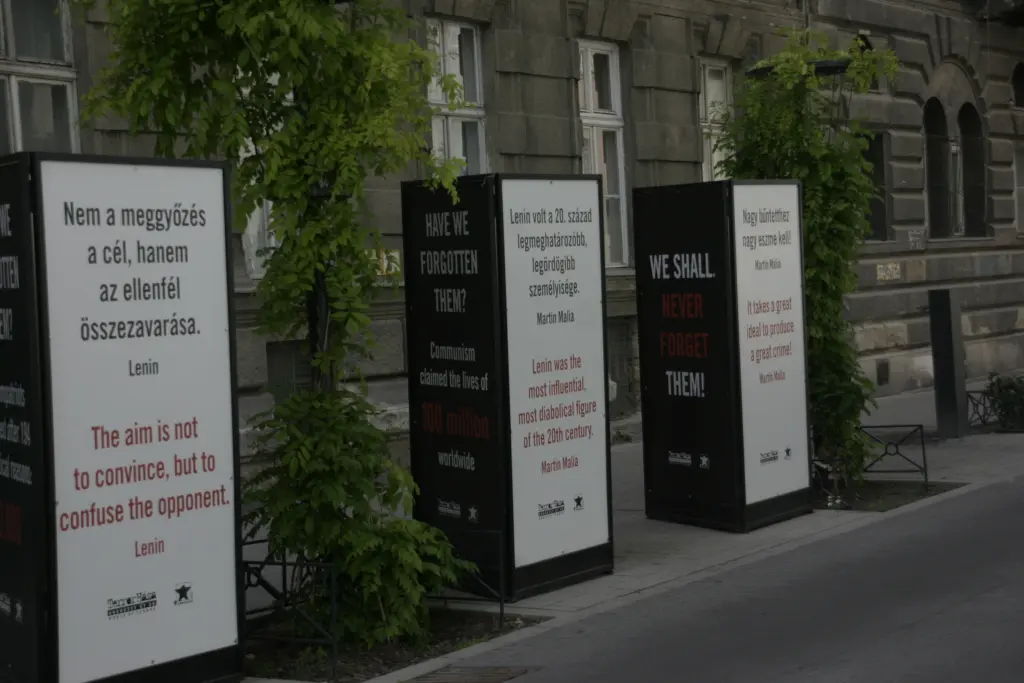
How the museum shapes historical consciousness in Hungary
“Denial of guilt and victim-perpetrator reversal, along with revisionism, have been among the cornerstones of the Orbán governments”
According to Marsovszky, this form of historical representation has a significant influence on public historical consciousness in Hungary. It is closely linked to the political symbolism of the Orbán governments. As an example, she cites the elevation of the so-called Holy Crown, which was ceremoniously transferred from the Hungarian National Museum to the Hungarian Parliament building in 2000, as well as the emphasis on the “historical constitution” in the Hungarian Fundamental Law that came into force in 2012.
This reinforces a sacralized conception of the nation in which national identity and state sovereignty are based on historical and mythical traditions.
“The ‘historical constitution’ is described in government publications as the foundation of national identity and national sovereignty, so that—to put it in scientific terms—esotericism forms the basis of state ideology.”
Through this cultural expression of nationalist ideology, public historical consciousness is shaped toward an illiberal, strongly nationalistic self-image.
Hope for a More Critical Culture of Remembrance Under Péter Magyar
“The future prime minister, Péter Magyar, delivered an excellent speech on May 4, May 2026 in the Academy’s ballroom, in which he emphasized that the new Tisza government would respect academic freedom based on source- and fact-oriented, empirical, and critical scientific research under all circumstances, promote scientific institutions, and guarantee their freedom. Such a promise is significant because only through it can critical reflection in historical research continue to develop. In the course of such critical reflection, the concept of the Terrorhaus Museum would also need to be rethought. It is to be hoped that this will take place within a societal discourse in which the past is not regarded as a closed chapter, but rather as an ongoing endeavor within the process of democratization.”
Sources: Bundeszentrale für politische Bildung, Ulysses Travel, Wikipedia.de, Magdalena Marsovszky auf Academia.edu, Website des Hauses des Terrors, Magdalena Marsovszkys Beitrag „Die Märtyrer sind die Magyaren“ in: Die Dynamik der europäischen Rechten, VS Verlag für Sozialwissenschaften (2011)
Photos: Anna Katharina Breitling – Pester Lloyd / Please include the URL and the author’s name when using this material. Portrait of Magdalena Marsovszky, Copyright by Magdalena Marsovszky
Unser monatlicher Nachrichtenspiegel: die wichtigsten Meldungen aus Ungarn und Mitteleuropa, einmal im Monat per E-Mail. Kostenlos, kein Spam, jederzeit abbestellbar.
Nachrichtenspiegel kostenlos abonnieren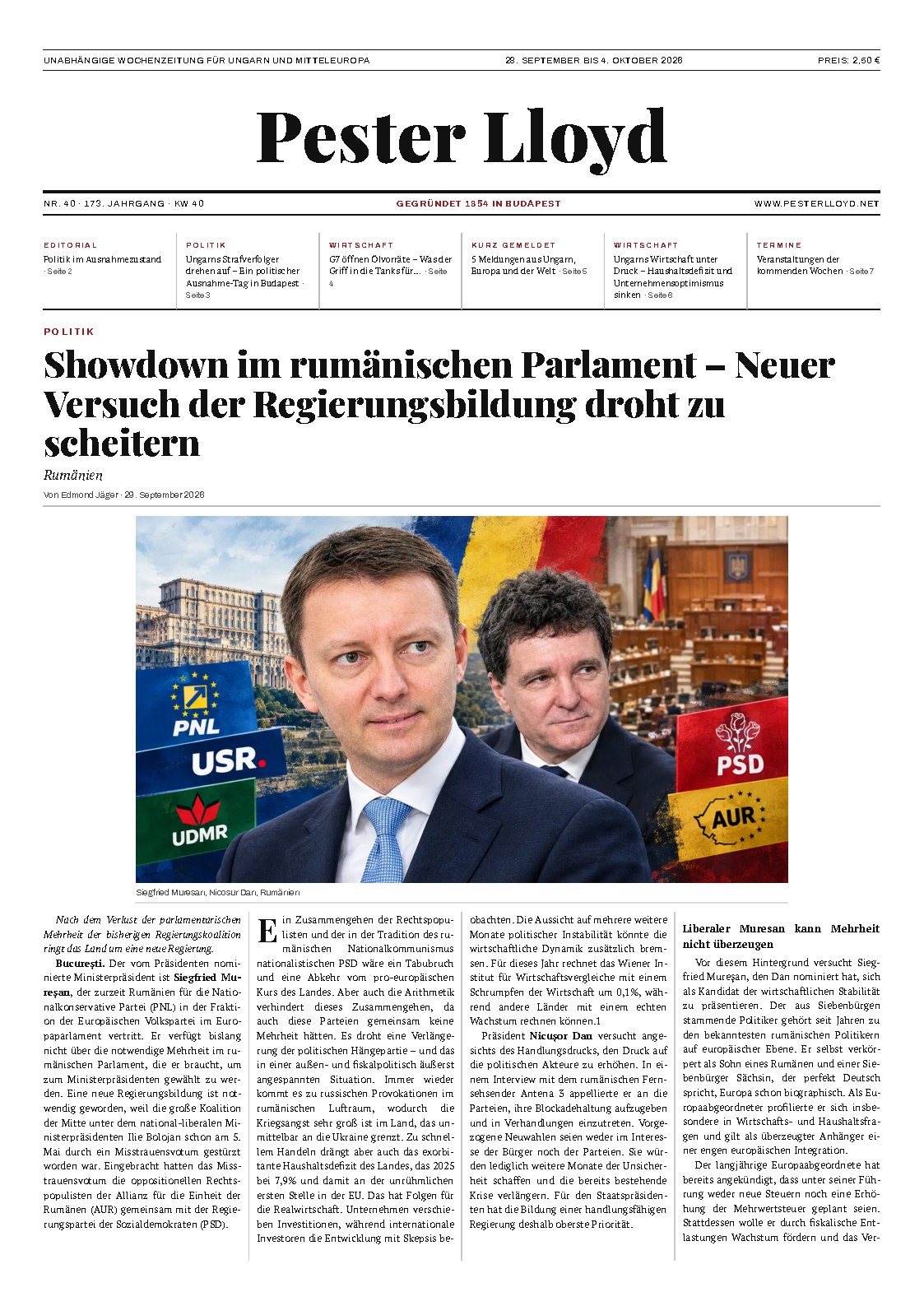
Neu · Jeden Freitag als PDF
Der Pester Lloyd als Wochenzeitung – wie früher am Kiosk, nur digital
Ausgabe 28. September – 4. Oktober 2026, 10 Seiten im großen Zeitungsformat. Darin unter anderem:
• Showdown im rumänischen Parlament – Neuer Versuch der Regierungsbildung droht zu scheitern• Ungarns Strafverfolger drehen auf – Ein politischer Ausnahme-Tag in Budapest
Zeitung ansehen – 2,50 €In eigener Sache – Ihr Kauf unterstützt unabhängigen Journalismus ohne Paywall.