The seemingly unshakable Orbán system lost its myth of invincibility this spring and began collapsing from within.
Budapest. The loss of power by Viktor Orbán was neither a sudden electoral accident nor a short-lived protest reaction. The parliamentary election of April 12, 2026 instead marked the collapse of a political system that had spent sixteen years presenting itself as untouchable. With the victory of the Tisza Party under Péter Magyar, the central assumption of Orbánism disintegrated: that there was no realistic alternative to Fidesz in Hungary.
The numbers from recent weeks illustrate how profound this collapse has become. According to a current survey by the Publicus Institute, Fidesz-KDNP has fallen to just 17 percent support among the general population, while the Tisza Party stands at 55 percent. Among committed voters, the ratio is even more dramatic, with 73 percent backing the new governing party compared to 20 percent for Fidesz. Particularly striking is the fact that even 31 percent of Fidesz voters now say they are optimistic about the new government.
This development cannot be explained solely by Magyar’s popularity. Orbán instead lost political credibility simultaneously across several decisive fronts: morally, economically, communicatively, and ultimately psychologically.
The real turning point began in early 2024 with the pardon scandal surrounding former president Katalin Novák. The pardon of a man involved in covering up sexual abuse at a children’s home struck directly at the ideological core of the Fidesz narrative. For years, the government had portrayed itself as the moral defender of family values and child protection. Within days, that self-image collapsed.
It was precisely at this moment that Péter Magyar broke away from the inner circle of power. The former Fidesz insider linked his public revolt against the government with the accusation that the project of a “national, sovereign, civic Hungary” had become a political façade concealing corruption and concentration of power. Because the criticism came from a former member of the system itself, it appeared more credible than years of attacks from the traditional opposition.
The Loss of Social Control
Orbán’s second major defeat involved the loss of control over the political public sphere. Fidesz still dominated much of the traditional media market, but the party lost its ability to define the national mood.
Magyar understood early on that conventional opposition campaigns stood little chance against the media superiority of Fidesz. Instead, he relied on constant physical presence. His nationwide tours through small towns and villages broke through the communicative isolation upon which the government system had long depended. While Orbán increasingly organized tightly controlled events, Magyar sought direct confrontation with voters.
The contrast became visible during the 2026 campaign. For the first time in years, Orbán returned to public appearances before open crowds. Yet instead of disciplined loyalty, he was met with protests and boos. One particularly symbolic moment occurred in March, when Orbán shouted at demonstrators and accused them of wanting a “pro-Ukrainian government.” The footage spread virally and created the impression of a prime minister who could no longer control the social reality around him.
The government also lost its digital dominance. Although Orbán still had significantly more Facebook followers than Magyar, the Tisza leader generated far higher engagement rates. His short videos, improvised livestreams, and direct communication appeared more authentic than the highly professionalized government propaganda machine. Younger voters in particular moved sharply away from Fidesz. According to polling data, roughly two-thirds of younger voters supported the opposition.
The rupture with the younger generation also had cultural causes. The government increasingly appeared anachronistic. Conflicts surrounding Budapest nightlife, morality-driven political campaigns, and years of war and threat rhetoric intensified among many young Hungarians the feeling of social stagnation.
Everyday Reality Against Sovereignty Rhetoric
In the end, Orbán above all lost against the country’s social reality. The Hungarian economy had already shown clear signs of exhaustion before the election. Inflation, rising living costs, and structural problems in healthcare and education increasingly dominated everyday life. For years, Fidesz had managed to overshadow economic difficulties through national mobilization campaigns, anti-migration rhetoric, and geopolitical conflict narratives. By 2026, that strategy no longer worked.
Orbán’s Russia policy became particularly problematic. The prime minister built much of his campaign around foreign policy polarization, claiming the opposition would drag Hungary into war or subordinate the country to Ukrainian interests. This argument, however, lost substantial credibility after reports emerged about alleged Russian influence operations during the campaign and Foreign Minister Péter Szijjártó faced accusations of sharing internal EU discussions with Moscow.
For Orbán, the symbolism was historically sensitive. The politician who in 1989 had demanded the withdrawal of Soviet troops now found himself confronted with the slogan “Ruszkik haza” — “Russians go home” — a phrase once directed against Soviet domination and now increasingly aimed at his own government.
Magyar systematically exploited this shift. Since his inauguration on May 9, his government has attempted to visibly reorder the material priorities of the state. While Orbán focused on sovereignty, security rhetoric, and geopolitical confrontation, Magyar speaks about hospitals, schools, EU funds, and living costs.
This became especially visible in his criticism of the previous government’s military prestige projects. Hungary, Magyar argued, does not need “spy satellites” but functioning public services. In doing so, he directly addressed the social exhaustion that had accumulated over many years.
The new government also began exposing the economic networks of the old system. Ministerial transition audits reportedly uncovered chaotic administrative conditions and multi-billion-forint contracts signed immediately after the election defeat. Magyar additionally announced plans to terminate overpriced state rental contracts linked to István Tiborcz and to legally re-examine the party-aligned asset foundations created during the Fidesz era.
Yet the most important effect of these first weeks may lie elsewhere entirely: many Hungarians now feel for the first time that Fidesz is no longer untouchable.
That psychological rupture probably explains the party’s rapid decline better than any individual campaign issue. Orbán did not simply lose votes. He lost the political aura of historical inevitability that had sustained his rule for sixteen years.
Sources: Publicus, Politico Europe, Wikipedia
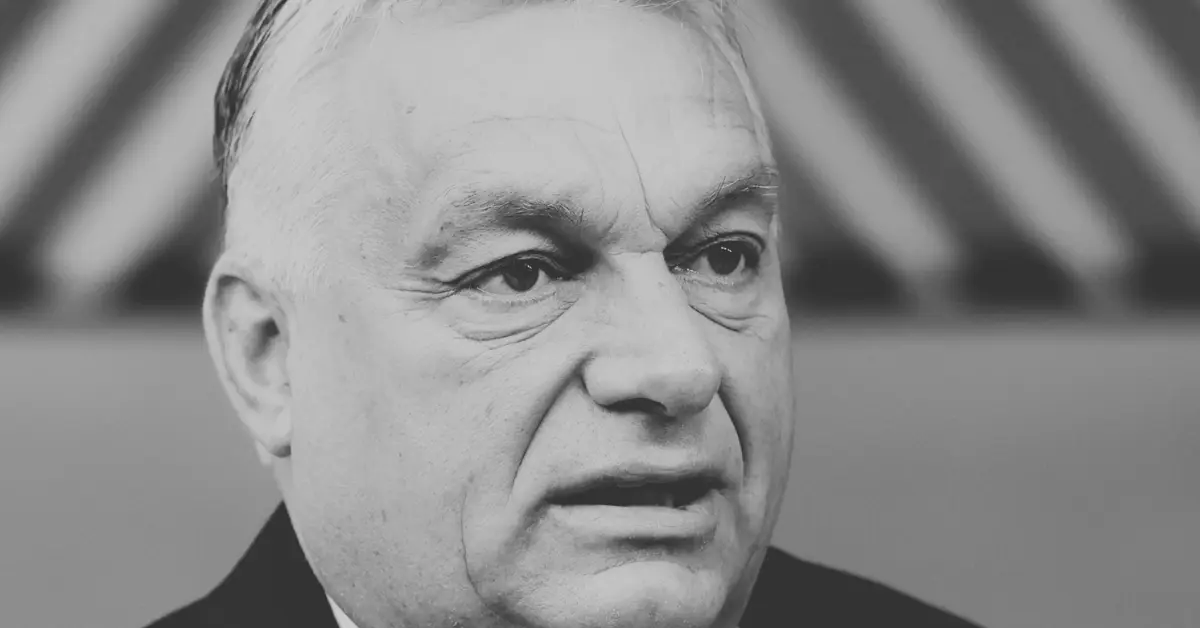
Photo: Viktor Orbán (Wikipedia/EU)
Unser monatlicher Nachrichtenspiegel: die wichtigsten Meldungen aus Ungarn und Mitteleuropa, einmal im Monat per E-Mail. Kostenlos, kein Spam, jederzeit abbestellbar.
Nachrichtenspiegel kostenlos abonnieren
Neu · Jeden Freitag als PDF
Der Pester Lloyd als Wochenzeitung – wie früher am Kiosk, nur digital
Ausgabe 12.–18. Oktober 2026, 17 Seiten im großen Zeitungsformat. Darin unter anderem:
• Schachecke: Evergreen, Joghurt, Zeitnot: Gewinnzüge im Detail• Polyák an der Schaltstelle – Was sich in Ungarns Medienaufsicht ändert
Zeitung ansehen – 2,50 €In eigener Sache – Ihr Kauf unterstützt unabhängigen Journalismus ohne Paywall.